Agroforestry
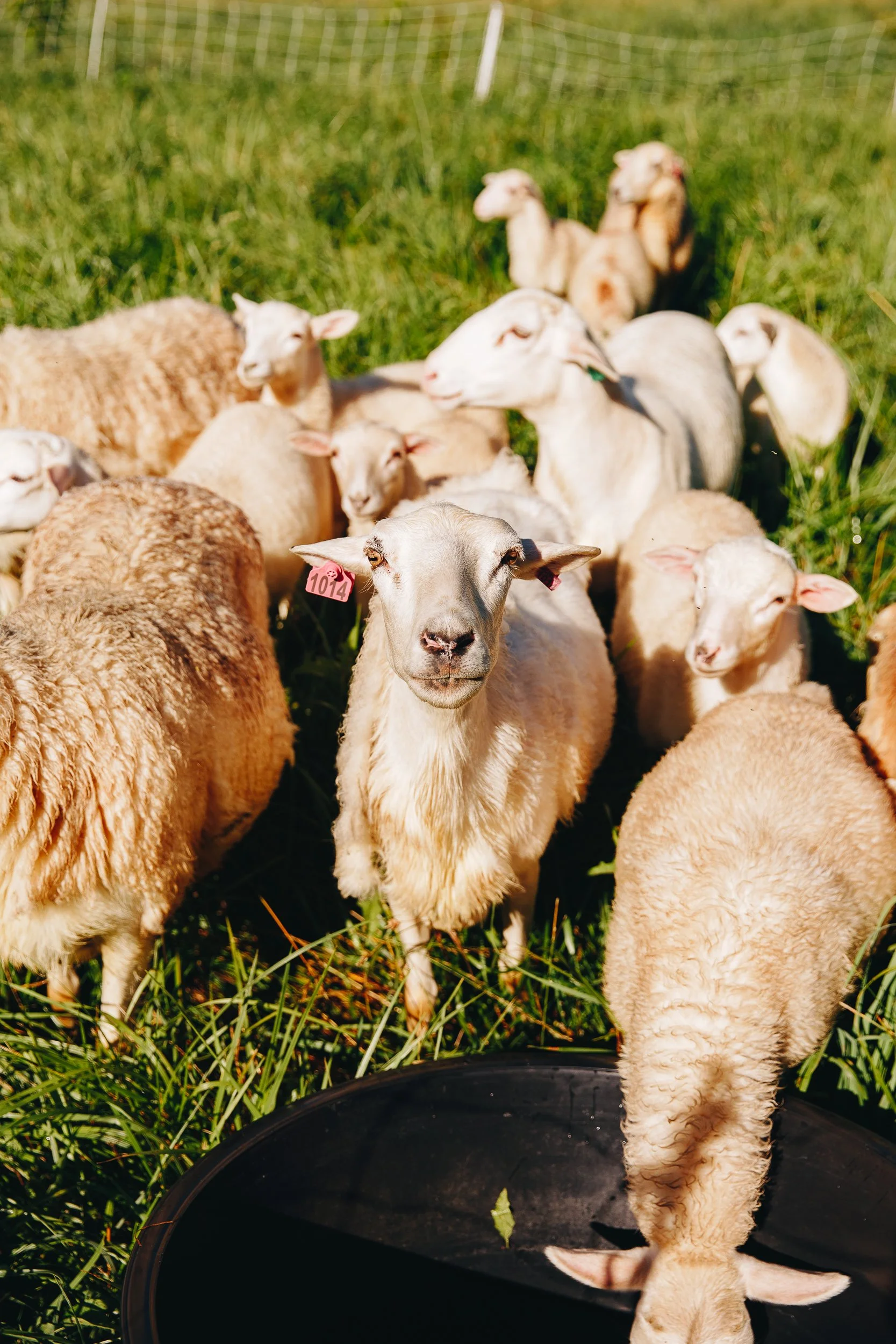
Agroforestry is the deliberate integration of trees and perennial crops into agricultural systems to provide additional production, ecological functions, and long-term landscape structure. At Wild East, our agroforestry systems are primarily designed as silvopasture, combining perennial tree plantings with grazed pasture, while also incorporating fruit, nut, native, and other multipurpose species.
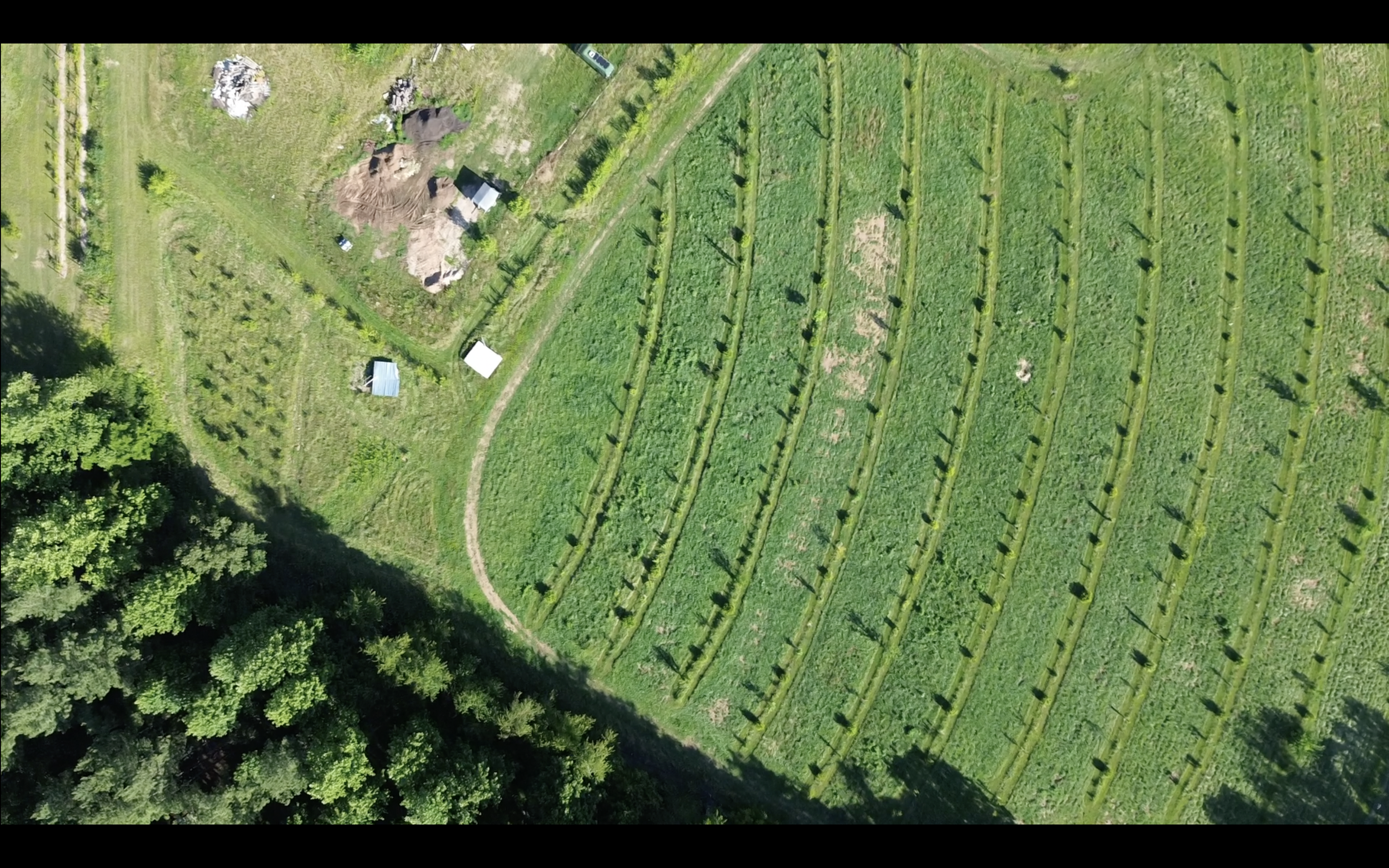
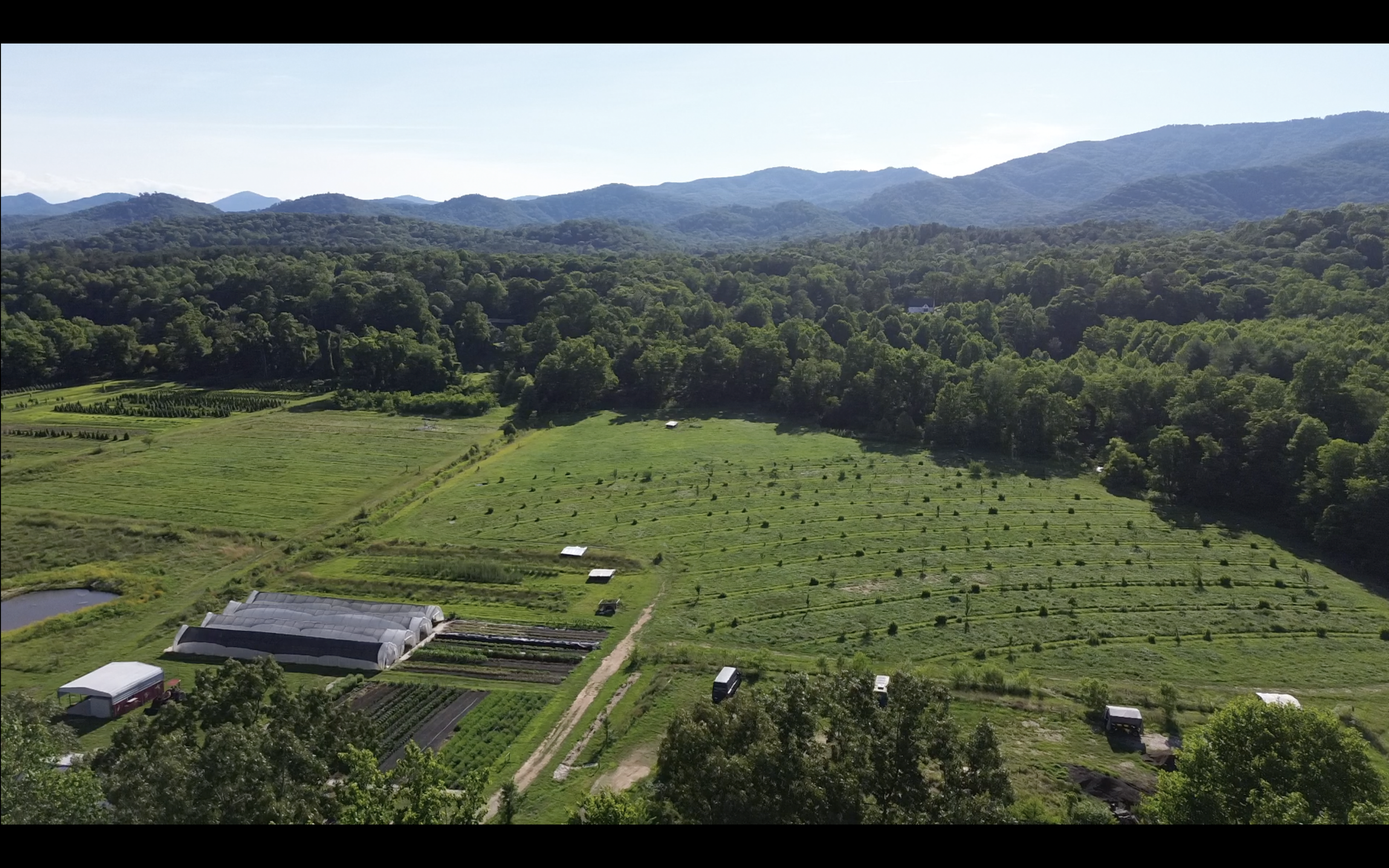
Our initial agroforestry design covered approximately 12 acres of the farm. The system was designed as a long-term framework with species, spacing, orientation, access, infrastructure, and eventual succession all considered before installation.
Site Analysis and Layout
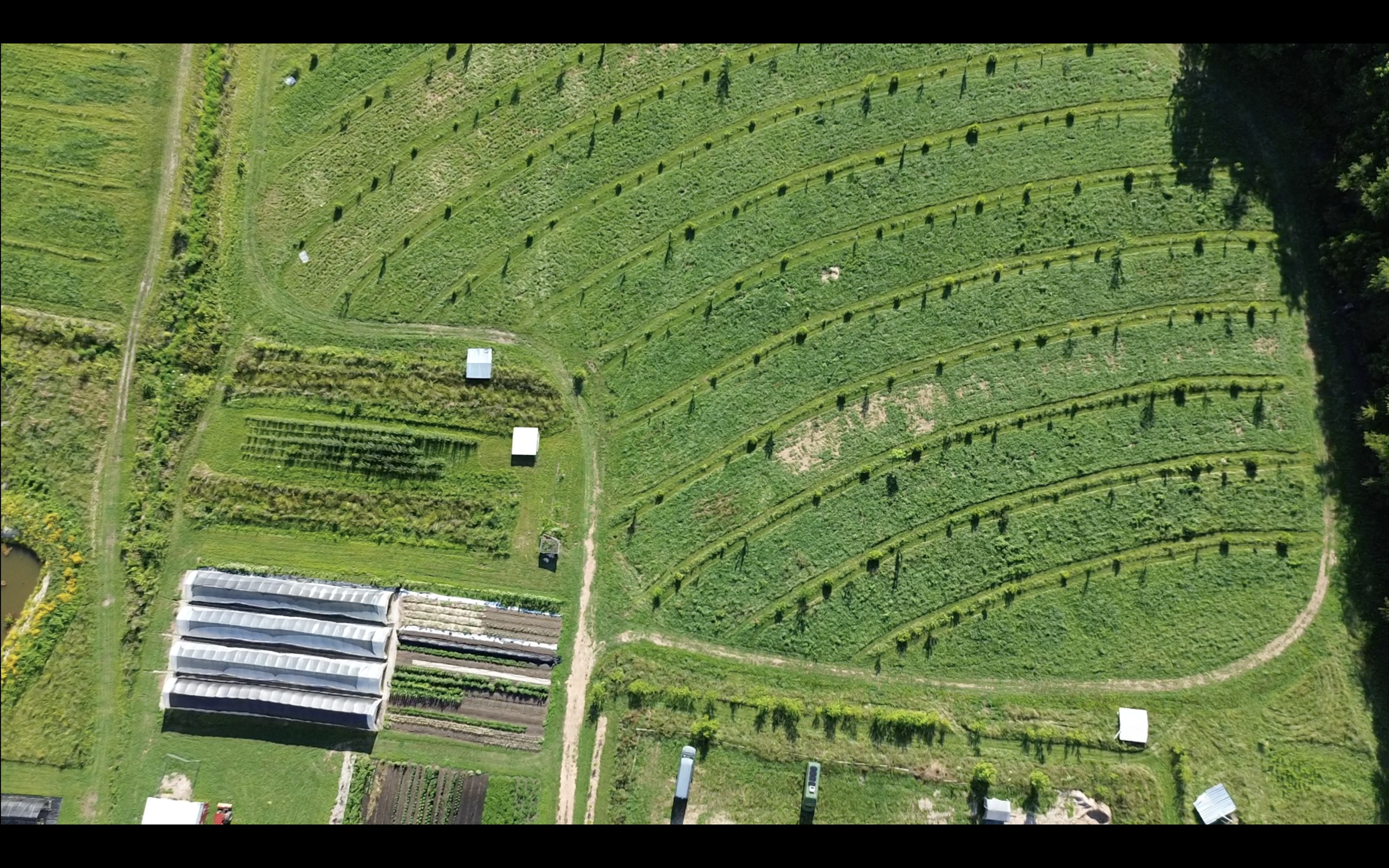
The design process begins with mapping the property in detail. We used three-foot contour mapping along with aerial imagery, slope, aspect, existing field patterns, and other site information to determine the most appropriate arrangement of tree lanes. Google Earth was then used to draw proposed planting lines, measure their lengths, and calculate tree quantities and spacing before ground installation. The digital design was subsequently ground-truthed and adjusted in the field.
Although keyline patterns were considered during the design process, the relatively flat character of the primary pastures made north-south orientation more useful for maximizing solar exposure. The resulting tree lanes generally follow this orientation while incorporating curves and variations in alignment. This allowed us to increase the number of trees within the available area while avoiding an entirely rigid planting pattern.
Designing plantings around the practical requirements of the farm is of upmost importance. Standardized distances allow fencing, field pens, and other infrastructure to be used throughout the system, while designated headways provide space for machinery to turn and move between production areas.
Fruit-Based Silvopasture
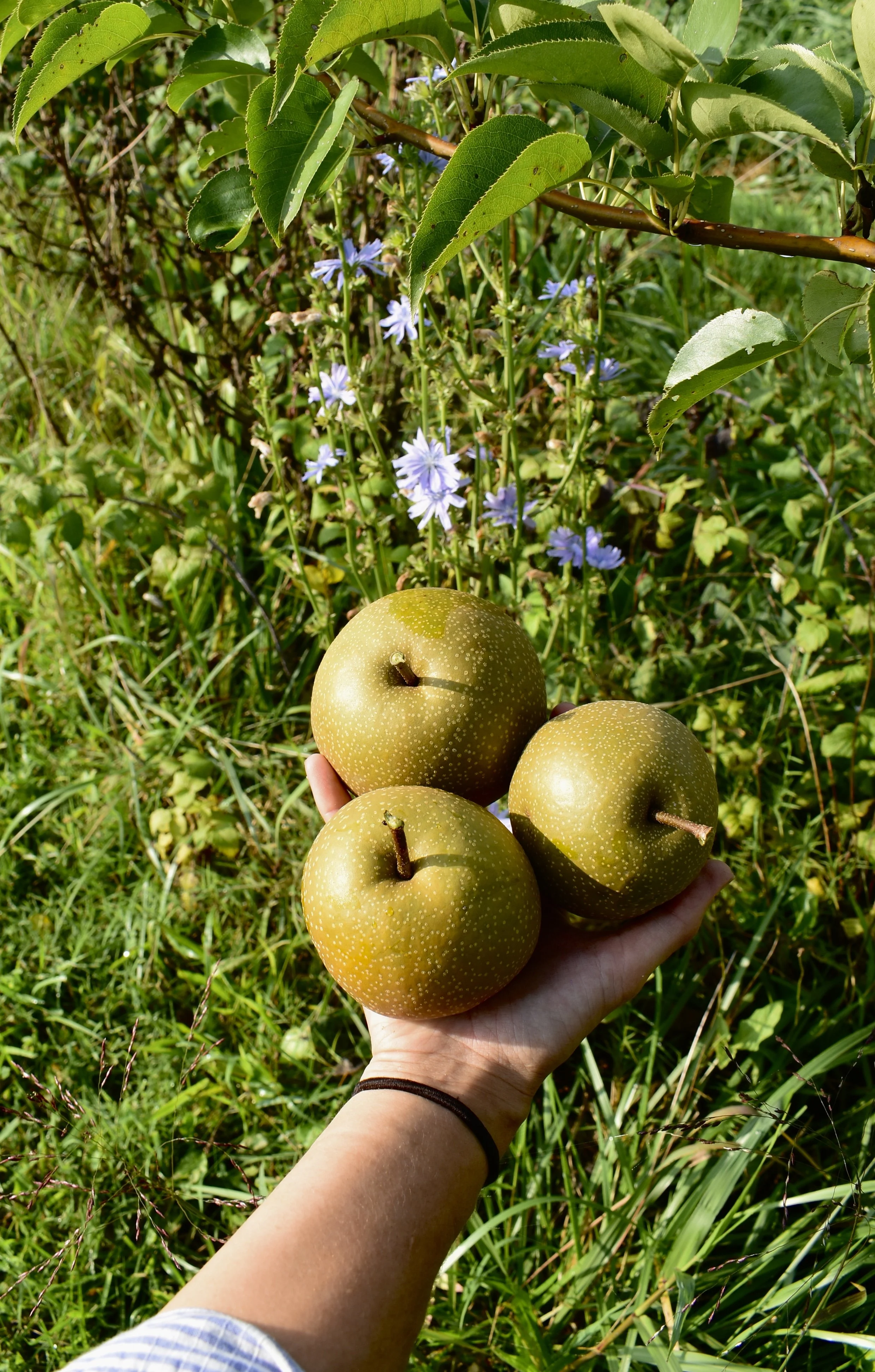
The primary silvopasture planting combines fruit trees, shrubs, and longer-lived canopy species. Apples, Asian pears, pawpaws, Asian persimmons, and mulberries were planted at 25-foot spacing, with hazelnuts occupying the intervening spaces at 12.5-foot spacing. Each lane also contains a native canopy tree intended to eventually become part of the mature structure of the planting.
The inclusion of native canopy trees is intended to create a succession from the initial fruit-producing system toward a longer-lived tree community. The fruit trees are expected to have a productive lifespan of approximately 30 to 50 years, while the native canopy species can continue developing after the original fruit trees have declined. This creates the possibility of maintaining substantial tree cover and structural diversity rather than eventually returning the land to an open pasture system.
Matching Species to Site Conditions
Agroforestry systems need to account for variation within a farm rather than applying a single planting pattern everywhere. For example, our nut planting occupies a more marginal portion of the property with heavier, poorly draining clay soils and lower-quality pasture. Species selection was therefore shifted toward trees capable of tolerating those conditions, including pecans, butternuts, English walnuts, black walnuts, and shagbark hickories.
This planting is intended partly as an experiment rather than solely as a commercial nut orchard. The objectives include future staple food production, shade and fodder for livestock, habitat, and the establishment of a long-lived perennial food system. Trees were planted at relatively high density with expected losses and future selective thinning incorporated into the design. Over time, trees can be selected based on vigor, growth rate, health, and site performance.
Succession and Natural Regeneration
Succession is another consideration in the design of the system. On a dry ridge where at the top of the farm, naturally occurring American persimmons, oaks, tulip poplars, and other native species have begun establishing among the planted trees.
Rather than treating this regeneration as undesirable competition, we are using it as an opportunity to guide the eventual composition of the planting. Some trees can be selectively removed while others are retained based on their performance and function. The intention is to develop a mixture of planted and naturally occurring species that can ultimately provide both productive and ecological functions while remaining compatible with grazing.
Perennial Crops on Marginal Land
Perennial crops can also provide productive uses for areas that are poorly suited to annual cropping, mechanized production, or animal integration. We planted blueberries on a steep west-facing slope that is impractical for routine machinery or mobile livestock infrastructure. The site can instead be managed primarily on foot using hand tools.
Multiple blueberry varieties were selected with different harvest periods, with the goal of establishing a U-pick enterprise. Over time, the planting may be expanded into a broader perennial-based visitor enterprise incorporating other fruit crops, flowers, and harvest opportunities.
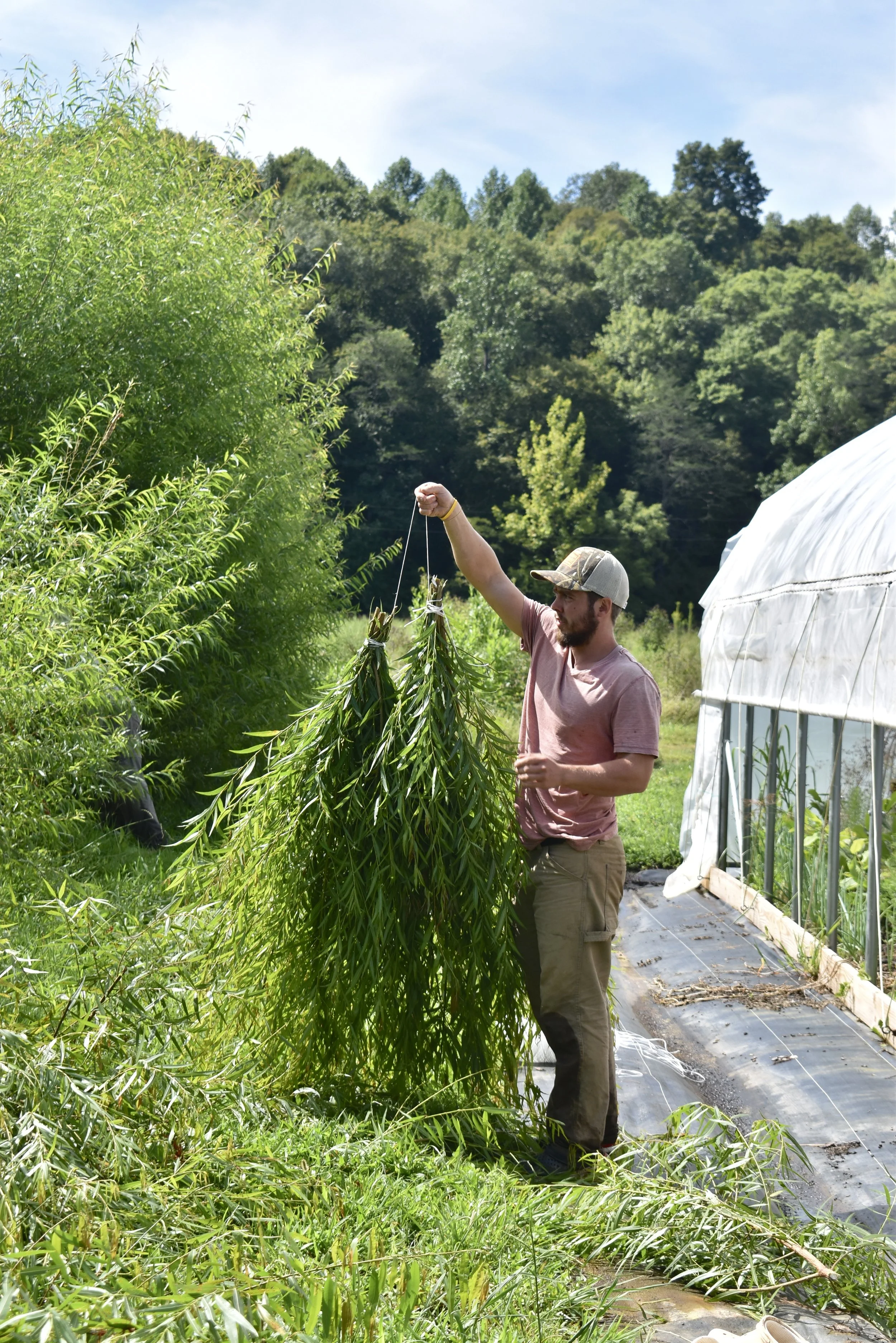
Other plantings serve functions beyond direct crop production. Native species have been established along denuded riparian areas and drainage ditches, while willows were planted along a property boundary to provide a rapidly growing privacy screen and some protection from spray drift originating from a neighboring nursery.
Establishment and Management
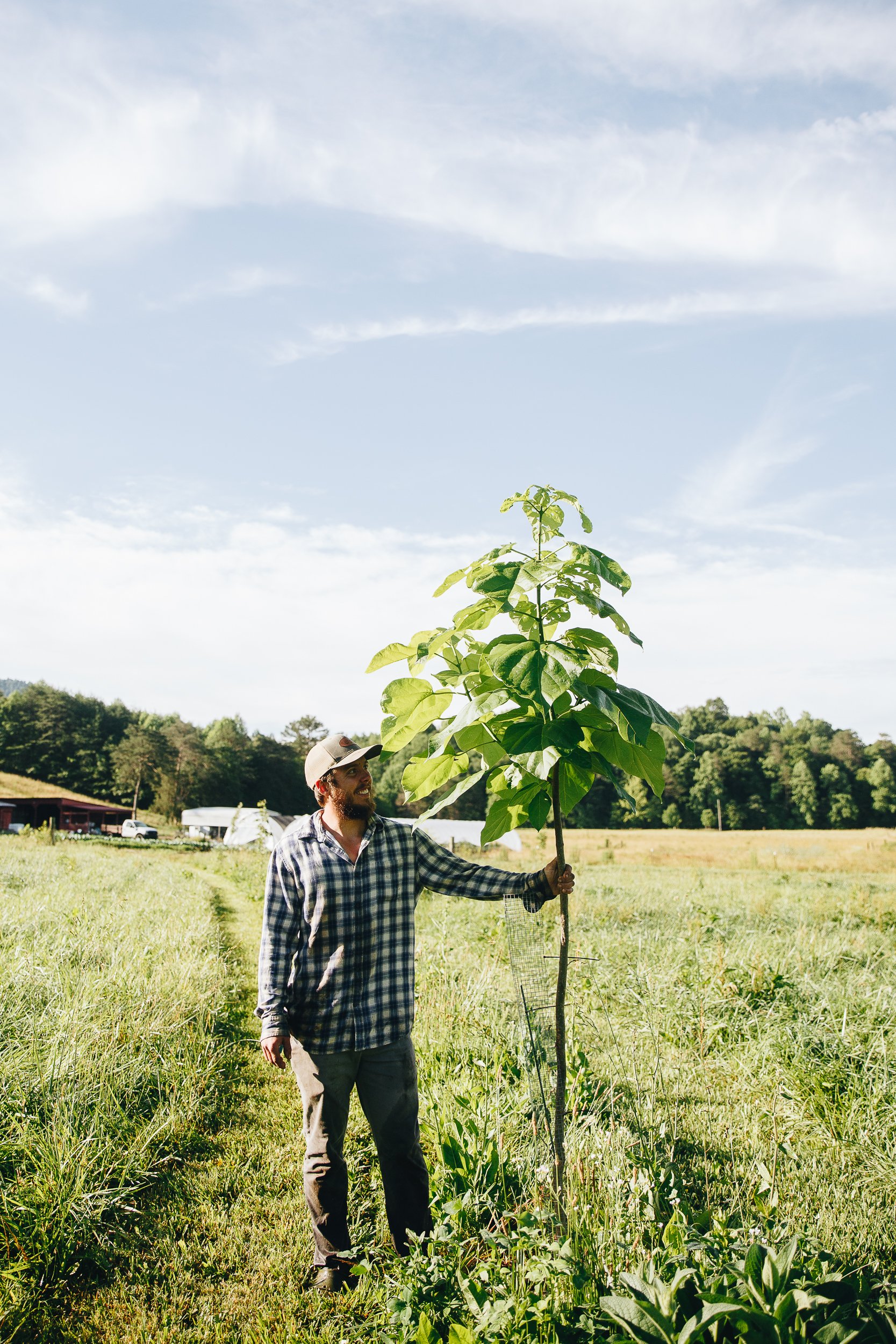
Tree establishment requires substantially more attention during the first years. Our approach is to provide favorable conditions at planting through adequate planting holes, fertility, and tree protection. Some mortality is expected in any large planting, but careful establishment reduces losses attributable to preventable planting or establishment problems.
The overall design provides a framework for managing the farm over several generations. Species selection and spacing determine the initial production system, while natural regeneration, tree mortality, selective thinning, livestock integration, and site-specific management will continue to shape the system over time.
The result is intended to be a productive agricultural landscape that becomes more structurally complex as it matures, while continuing to accommodate the practical requirements of livestock, infrastructure, access, and farm production.